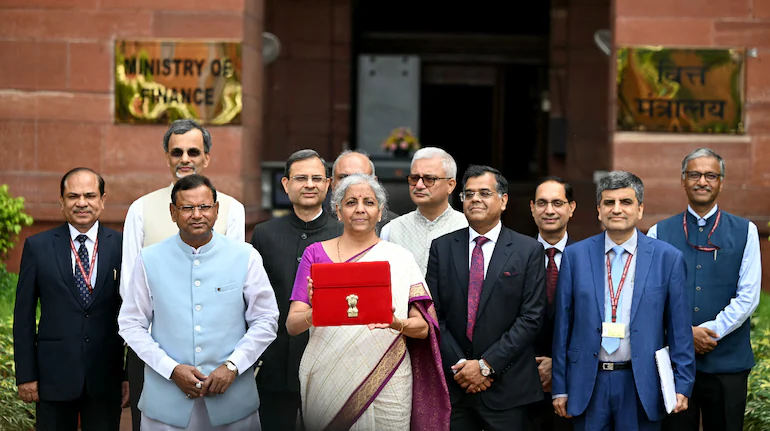


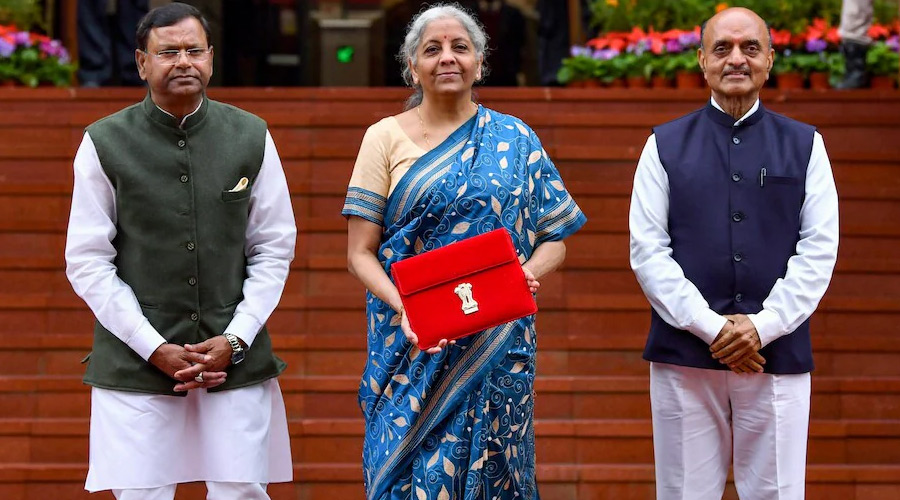
The Union Budget 2026–27 was presented today with the government highlighting its commitment to fiscal discipline, economic stability, and focused welfare initiatives. It was notable that both the old and new tax regimes left the income tax slabs unchanged. This move is expected to provide predictability and relief for salaried workers and small taxpayers. To curb tax evasion, the Finance Minister has set July 31 as the deadline for filing ITR-1 and ITR-2. For FY 2026–27, government spending of ₹50–52 lakh crore focuses on infrastructure, jobs, digital services, while keeping taxes stable.
Government Unveils 2026 Budget at Kartavya Path, Announces Major Rs 11 Lakh Crore Investment
The Union Budget 2026 was unveiled today at Kartavya Path, with the government emphasizing a strong focus on inclusive growth, fiscal discipline, and national development. In her address, the Finance Minister detailed a substantial public investment package worth nearly ₹11 lakh crore. The allocation is set to boost infrastructure, generate employment, and provide support for vital sectors across the Indian economy. Officials described the budget as a strategic plan to secure India’s long-term prosperity and stability.

What Does Total Project Cost Mean?
This covers spending on building things like roads, railways, and hospitals, as well as spending on regular expenses such as subsidies, government salaries, pensions, and welfare programs.
Sector-wise Investment
| Sector | Allocation (₹ crore) | Key Focus Area | |
|---|---|---|---|
| Transport | 5,98,520 | Connectivity, roads, railways, infrastructure | |
| Defence | 5,94,585 | Modernization, national security | |
| Rural Development | 2,73,108 | Housing, livelihoods, rural infrastructure | |
| Home Affairs | 2,55,234 | Internal security, public safety | |
| Agriculture & Allied Activities | 1,62,671 | Farmer support, irrigation, allied sectors | |
| Education | 1,39,289 | Schools, higher education, skill development | |
| Health | 1,04,599 | Public hospitals, AIIMS expansion | |
| Energy | 1,09,029 | Power generation, renewable energy | |
| Urban Development | 85,522 | Smart cities, urban infrastructure | |
| IT & Telecom | 74,560 | Digital connectivity, e-governance | |
| Commerce & Industry | 70,296 | Industrial growth, trade promotion |
The budget keeps GST rates and income tax slabs unchanged, controls essential prices, boosts healthcare investment, and balances economic growth with fiscal responsibility and citizen welfare.
The budget keeps GST rates and income tax slabs unchanged, controls essential prices, boosts healthcare investment, and balances economic growth with fiscal responsibility and citizen welfare. In the Union Budget 2026, coal, scrap metal, liquor, and tobacco will be more costly, while leather goods, footwear, cancer drugs, foreign travel, education abroad, electronics, and several imported items will become less expensive.

In the wake of the 2026 budget announcement, financial analysts observed that the government is seeking to balance prudent spending with bold development plans. Industry experts emphasized that the real impact of the budget will hinge on how efficiently new projects are carried out. Should these initiatives proceed as outlined, India could see a boost in employment opportunities, improved infrastructure, and a stronger economic forecast.